
Gas stations and convenience stores
Gas Station Financing for Fuel, Pumps, Tanks and the Store
Fuel is drafted from your account within days at a few cents per gallon, while the store and the food program make most of the profit. These are the products that fit a station or c-store, and how they combine.
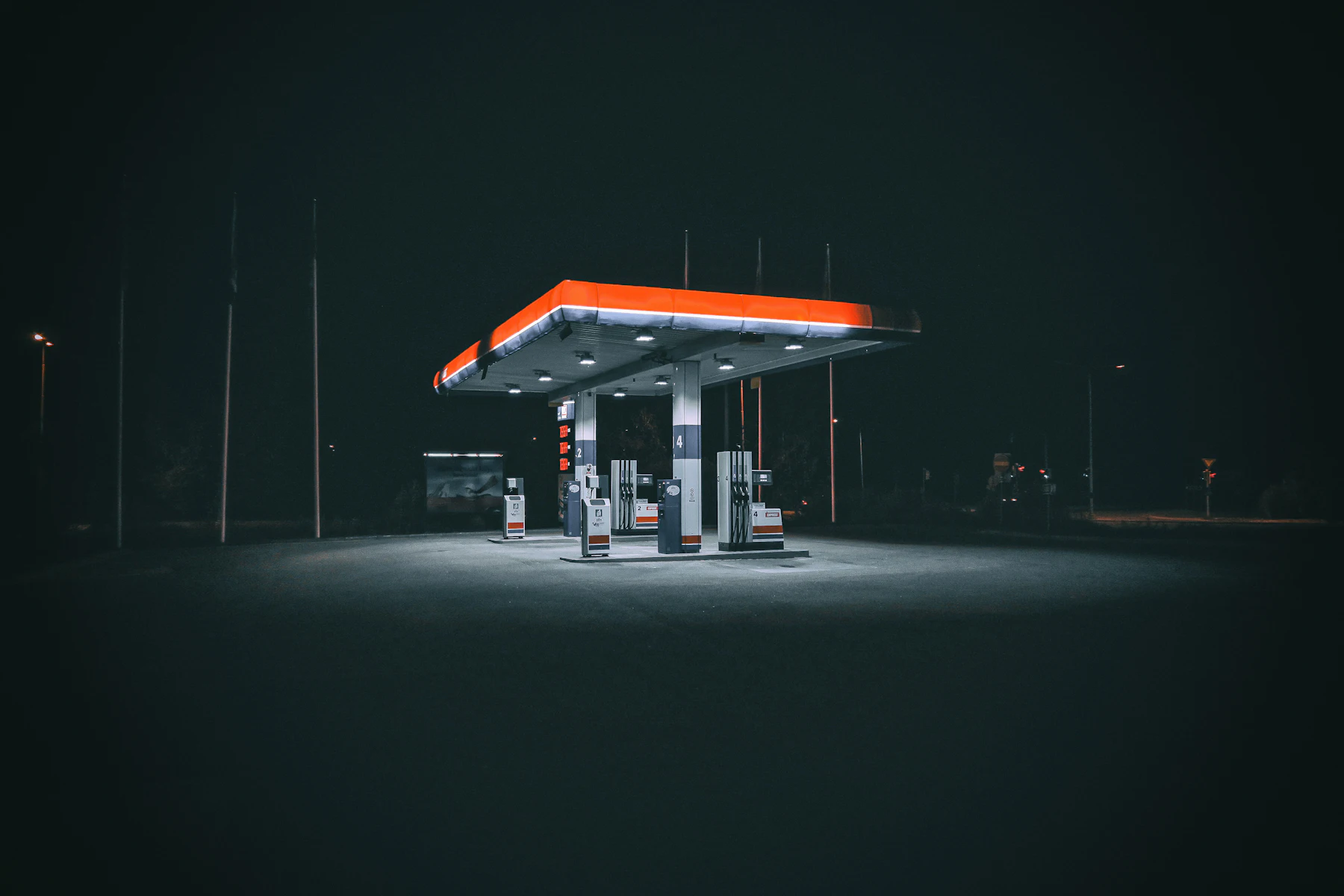
What Financing Is Available for a Gas Station or Convenience Store?
Working capital loans and merchant cash advances cover fuel drafts, card-settlement lag and store inventory, and repay from daily card volume. Equipment financing covers dispensers, EMV upgrades, coolers, canopies, POS and tank work with the equipment as collateral. A business line of credit smooths fuel price swings. SBA 7(a) loans fit buying a station or its real estate for an operator with two years of returns and a clean environmental file.
Thin Fuel Margins, Strong Card Volume: How Lenders Read a Station
A station’s bank statements look unlike almost any other small business. Deposits are large because fuel is a pass-through: the industry sold $476.3 billion of fuel in 2025 against $341.2 billion inside the store, yet the store produced 61.2 percent of gross profit dollars, with foodservice alone delivering 38.9 percent of in-store gross profit, according to the NACS State of the Industry data published in April 2026. Card fees reached a record $21.3 billion. A lender that underwrites on top-line revenue will overstate what you can carry; one that knows the sector underwrites on gross profit and on the consistency of daily card batches.
That is the first thing to understand about a station file: the fuel supplier’s EFT drafts, the card-processing settlements and the daily deposits are what the underwriter reads. Consistent daily batches with no NSFs, a supply agreement with reasonable terms and a store that carries its share of margin get approved; a station whose fuel drafts routinely overdraw the account does not, whatever the revenue.
Which Product Fits Which Problem
| The problem | Product | Why it fits |
|---|---|---|
| Fuel drafts hit before card settlements clear | Working capital loan or merchant cash advance | Sized to daily card volume; repaid as a small share of each batch |
| Dispensers, EMV, coolers, canopy, LED, POS | Equipment financing | Full cost of the equipment; the asset secures it; term set to its working life |
| Tank replacement, lining, leak detection, compliance work | Equipment financing or term loan | Multi-year payment for a multi-year asset; some lenders want contractor quotes and permits |
| Adding a hot-food or coffee program | Term loan or working capital loan | Build-out plus opening inventory; foodservice carries the highest in-store margin |
| Fuel price swings and seasonal volume | Business line of credit | Draw when the wholesale price jumps, repay when the margin recovers |
| Buying a second station or the real estate | SBA 7(a) or 504 loan | Longest terms and lowest cost; sized for acquisitions in the seven figures |
The trap is using a short-term advance for a long-term asset. An advance that fits a $60,000 inventory gap is the wrong instrument for a $250,000 dispenser and canopy project, which should sit on equipment financing over five to seven years so the payment matches the years the equipment earns.
Pumps, Tanks and the Store: Finance the Asset as an Asset
Dispensers, EMV card readers, walk-in coolers, LED canopy lighting, food equipment and point-of-sale systems can all be financed on the equipment itself. Approval leans on the quote and on the business’s cash flow rather than on the owner’s personal credit alone, and the term is matched to the asset. Used dispensers bought from a dealer can usually be financed; private-party purchases are harder.
Underground storage tank work is its own category. Replacement, relining and leak-detection upgrades are large, permitted projects that most lenders will finance only against contractor quotes and evidence the site is in compliance. Get the quotes, the permit status and your tank insurance certificate together before you apply; a station with an open compliance issue is hard to place with any lender until it is resolved.
Buying a Station: SBA-sized Deals
Gas stations are one of the industries where SBA 7(a) approvals run well above the program average. The SBA approved 77,600 7(a) loans for $37 billion in FY2025, an average of roughly $477,000, and published analyses of the FY2025 approval data report a median approval of about $1.24 million for gas stations, because most station deals include the real estate. Those figures describe acquisition and property loans, not working capital, and they should not be read as what a station can borrow on its cash flow alone.
An SBA station purchase needs two years of business tax returns for the buyer’s existing operation (or a full business plan and industry experience for a first station), a Phase I environmental site assessment and often a Phase II, the fuel supply agreement, and an equity injection that is typically around ten percent. Expect several weeks to close. If the deal is time-sensitive, a bridge from the lender network can hold the purchase together while the SBA file completes, and RAN Funding places both.
What a Gas Station File Needs
- Three months of business bank statements showing fuel drafts and card settlements; twelve if volume is seasonal.
- Three months of merchant processing statements, because daily card volume sets the size of a revenue-based offer.
- The fuel supply agreement and the lease or deed for the site.
- Equipment or contractor quotes, with permit status for any tank or canopy work.
- Every open position, including equipment leases, supplier credit and any existing advance.
One application covers every product in the network. Check your options — about five minutes, three months of statements, and a soft inquiry only.
Common Questions
Are gas stations a restricted industry for business funding?
Some lenders exclude fuel retail because of environmental and margin risk, but many in the RAN Funding network fund stations and c-stores routinely. The file is placed with lenders that know the sector, which is why merchant processing statements and the supply agreement matter as much as the bank statements.
Does high fuel revenue with thin margins help or hurt my application?
Neither on its own. Lenders that understand stations underwrite on gross profit and on the consistency of daily card deposits, not on top-line fuel sales. A station with steady batches and a store that carries margin is a strong file even at a few cents per gallon.
Can I finance a branded dealer station under a supply agreement?
Yes. The supply agreement is part of the file. Lenders read its term, its volume requirements and any image or equipment obligations, which can themselves be financed as equipment.
What are the minimum requirements?
For revenue-based products through RAN Funding: about twelve months of revenue deposited into a business bank account, consistent deposits, a credit score from 500, and the last three months of business bank statements (four in some states). Every product starts at $10,000. Lines of credit typically want a year in business and a 650+ score; term loans and SBA want two years, good credit and full financials.
How fast can a gas station be funded?
Merchant cash advances and working capital loans commonly fund the same business day or within 24 to 48 hours of a signed offer. Equipment financing usually takes a few days because the quote is verified. Lines of credit take days to open; SBA acquisition loans take weeks.
Sources
- U.S. Convenience In-Store Sales Top $340 Billion (NACS State of the Industry Report of 2025 Data) — NACS, 15 April 2026
- SBA Delivers Record Capital to Small Businesses in FY25 (News Release 25-83) — U.S. Small Business Administration, 30 September 2025
- 7(a) & 504 Activity Reports: FY2025 Year End — U.S. Small Business Administration, FY2025 year-end data
- 2026 Report on Employer Firms: Findings from the 2025 Small Business Credit Survey — Federal Reserve Banks, 3 March 2026
See What You Qualify For
One application, about five minutes, soft pull only. A funding specialist comes back with the offers you qualify for — and explains every term before you sign.
Financing That Fits This Situation