
Veterinary practices
Veterinary Practice Financing for Equipment, Buy-Ins and Expansion
Digital radiography, an in-house lab, a partner buy-in, a second location. A veterinary practice has predictable, card-paid revenue and a professional owner, and lenders price that well. These are the products that fit, and how they combine.
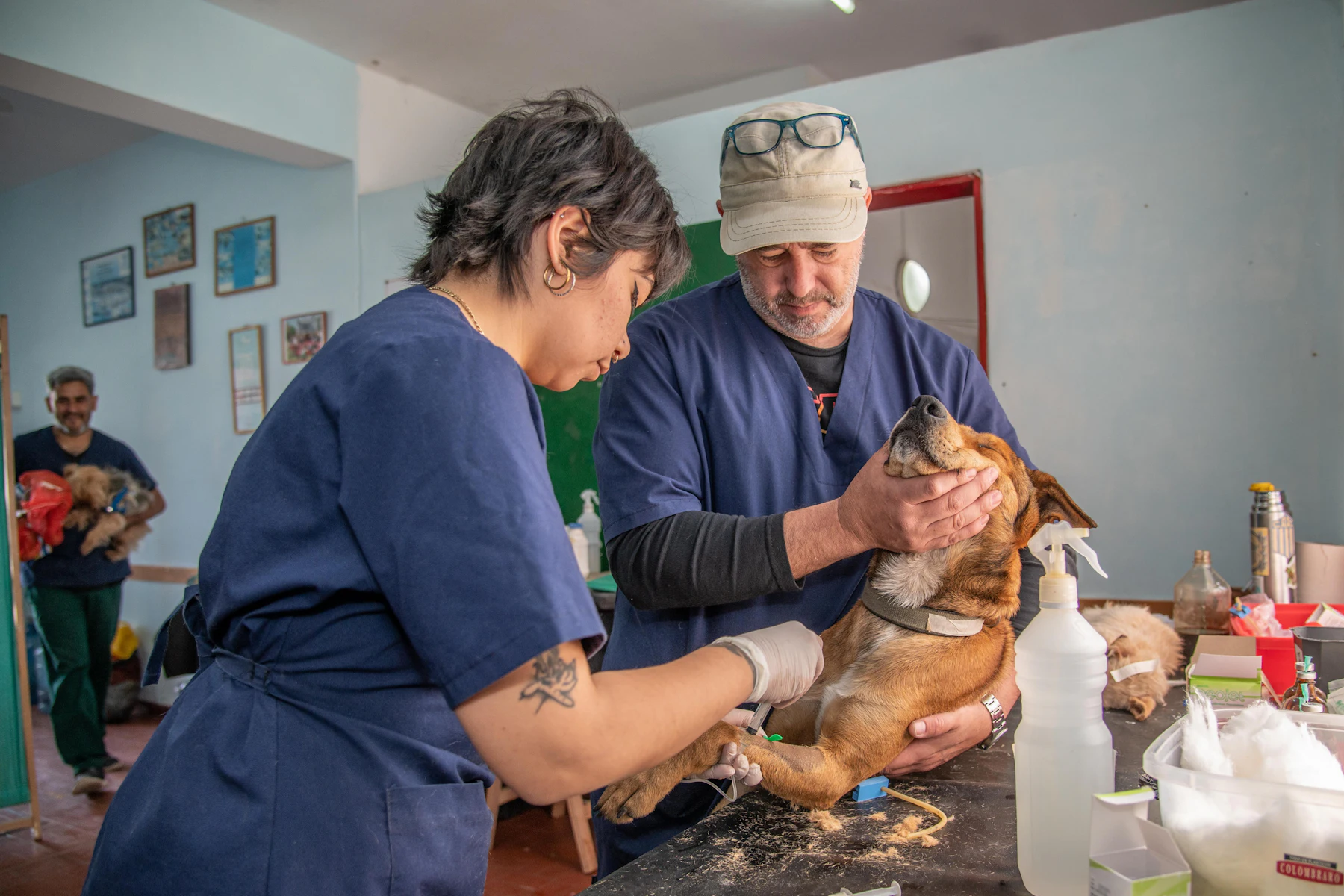
What Financing Is Available for a Veterinary Practice?
Equipment financing covers imaging, lab analyzers, dental and surgical equipment with the equipment as collateral. Term loans and SBA 7(a) loans fit a practice purchase, a partner buy-in, a build-out or a second location, and veterinary practices are among the industries with the largest SBA approvals. A business line of credit covers pharmacy inventory and payroll between busy months, and working capital loans fund in days when timing matters more than price.
Why a Veterinary Practice Is a Strong File
Lenders like practices for the same reasons owners do: revenue arrives daily by card, the clientele is recurring, and the owner is a licensed professional with a high earning floor. That shows up in the data. Published analyses of the SBA’s FY2025 7(a) approvals report a median approval of about $707,500 for veterinary practices, well above the program-wide average of roughly $477,000, and a May 2026 PeerSense analysis of 2.1 million SBA loans puts veterinary practices among the lowest-default categories, at about 4.1 percent. Practices that would be offered a short-term advance in another industry are usually offered a term loan or a line instead.
The pressure points are real, though. The AVMA reported in November 2023 that practice revenue rose 5.7 percent over two years while client visits fell 2.7 percent, with more pet owners saying higher prices would change how quickly they bring a pet in; the association’s 2026 Economic State of the Veterinary Profession report continues to track compensation, staffing and practice-operation costs. Growth now comes from equipment that keeps diagnostics and dentistry in-house, from wellness plans that smooth visits, and from adding doctors and rooms, all of which are capital decisions.
Which Product Fits Which Problem
| The problem | Product | Why it fits |
|---|---|---|
| Digital X-ray, ultrasound, in-house analyzers, dental unit, surgical suite | Equipment financing | Full purchase amount; the equipment secures it; term set to its working life |
| Buying a practice, a partner buy-in or an associate buy-in | SBA 7(a) loan or term loan | Ten-year terms with no real estate; the practice’s cash flow and the buyer’s licence carry the file |
| Build-out, a second location, adding exam rooms | SBA 7(a), 504 or term loan | Multi-year investment on multi-year money; 504 when real estate is included |
| Pharmacy and supply inventory, payroll between busy months | Business line of credit | Draw as needed, repay as collections come in, reuse next season |
| A gap that has to close this week | Working capital loan | Funds in 24 to 48 hours; refinance into cheaper money once the term product closes |
| Corporate-group offer to buy, and you want to stay independent | SBA 7(a) or term loan | Finance the growth a buyer would have funded, without selling the practice |
Equipment: Finance the Asset as an Asset
Because the equipment secures the financing, approval leans on the vendor quote and the practice’s cash flow rather than on the owner’s personal credit alone, and the payment is spread across the years the equipment earns. Imaging, laboratory analyzers, dental and anaesthesia equipment, surgical lighting and tables, kennels and practice-management software installations all qualify. A quote with model numbers sets the amount and the term, and a practice adding in-house diagnostics can usually show the underwriter how the new revenue covers the payment.
Refurbished equipment from a dealer can normally be financed. Software subscriptions and consumables cannot; those belong on a line of credit.
Buy-Ins and Acquisitions: the SBA Route
A partner buy-in, an associate buying out a retiring owner, or an outright practice purchase is where SBA 7(a) does its best work. The loan can run ten years without real estate and up to 25 years with it, it can include working capital and equipment in the same facility, and the equity injection on a change of ownership is usually around ten percent, sometimes met partly through a seller note. Lenders want the practice’s last two to three years of tax returns, a current profit-and-loss statement, the buyer’s licence and resume, a purchase agreement and a valuation. Expect several weeks from application to close.
If a deal has a hard date, a term loan or a bridge from the lender network can carry it while the SBA file completes. RAN Funding places both and tells you the cost of each before you commit.
What a Veterinary Practice File Needs
- Three months of business bank statements; twelve if the practice is seasonal or growing fast.
- Equipment quotes with model numbers for anything to be financed as equipment.
- Two years of business tax returns and a current P&L for any term, SBA or acquisition request.
- The purchase agreement, valuation and your licence for a buy-in or acquisition.
- Every open position, including equipment leases, practice-management software contracts and any existing advance.
One application covers every product in the network. Check your options — about five minutes, three months of statements, and a soft inquiry only.
Common Questions
Can a new veterinarian buy a practice without years of ownership history?
Often, yes. For an acquisition, lenders underwrite the practice being bought and the buyer’s licence, experience and credit, not a prior business. SBA 7(a) is the usual route, with an equity injection of around ten percent that can sometimes be met partly by a seller note.
Can I finance used or refurbished veterinary equipment?
Usually, when bought from a dealer and the equipment can be valued. The term is set to the remaining working life of the asset.
Is a merchant cash advance a good fit for a veterinary practice?
Rarely as a first choice. Most practices qualify for a line of credit, a term loan or equipment financing at a much lower cost. An advance makes sense only when a gap must close within a day or two and the practice will refinance it quickly.
What are the minimum requirements?
For revenue-based products through RAN Funding: about twelve months of revenue deposited into a business bank account, consistent deposits, a credit score from 500, and the last three months of business bank statements (four in some states). Every product starts at $10,000. Lines of credit typically want a year in business and a 650+ score; term loans and SBA want two years, good credit and full financials.
How fast can a practice be funded?
Working capital loans commonly fund within 24 to 48 hours of a signed offer. Equipment financing usually takes a few days because the quote is verified. Lines of credit take days to open; SBA acquisition and buy-in loans take weeks.
Sources
- 2026 Economic State of the Veterinary Profession — American Veterinary Medical Association, 11 March 2026
- Facing economic uncertainty, clients delay veterinary visits — American Veterinary Medical Association, 28 November 2023
- SBA Delivers Record Capital to Small Businesses in FY25 (News Release 25-83) — U.S. Small Business Administration, 30 September 2025
- 7(a) & 504 Activity Reports: FY2025 Year End — U.S. Small Business Administration, FY2025 year-end data
- 2026 SBA Lending Report: 2.1M Loans Analyzed — PeerSense, May 2026
- 2026 Report on Employer Firms: Findings from the 2025 Small Business Credit Survey — Federal Reserve Banks, 3 March 2026
See What You Qualify For
One application, about five minutes, soft pull only. A funding specialist comes back with the offers you qualify for — and explains every term before you sign.
Financing That Fits This Situation