
Restaurants and food service
Restaurant Financing Built for Thin Margins and Fast Weeks
Restaurant cash flow is weekly, food cost moves monthly, and the money is usually needed before the next good weekend. These are the financing options that work on that clock, and what the 2026 cost picture means for how much you should borrow.
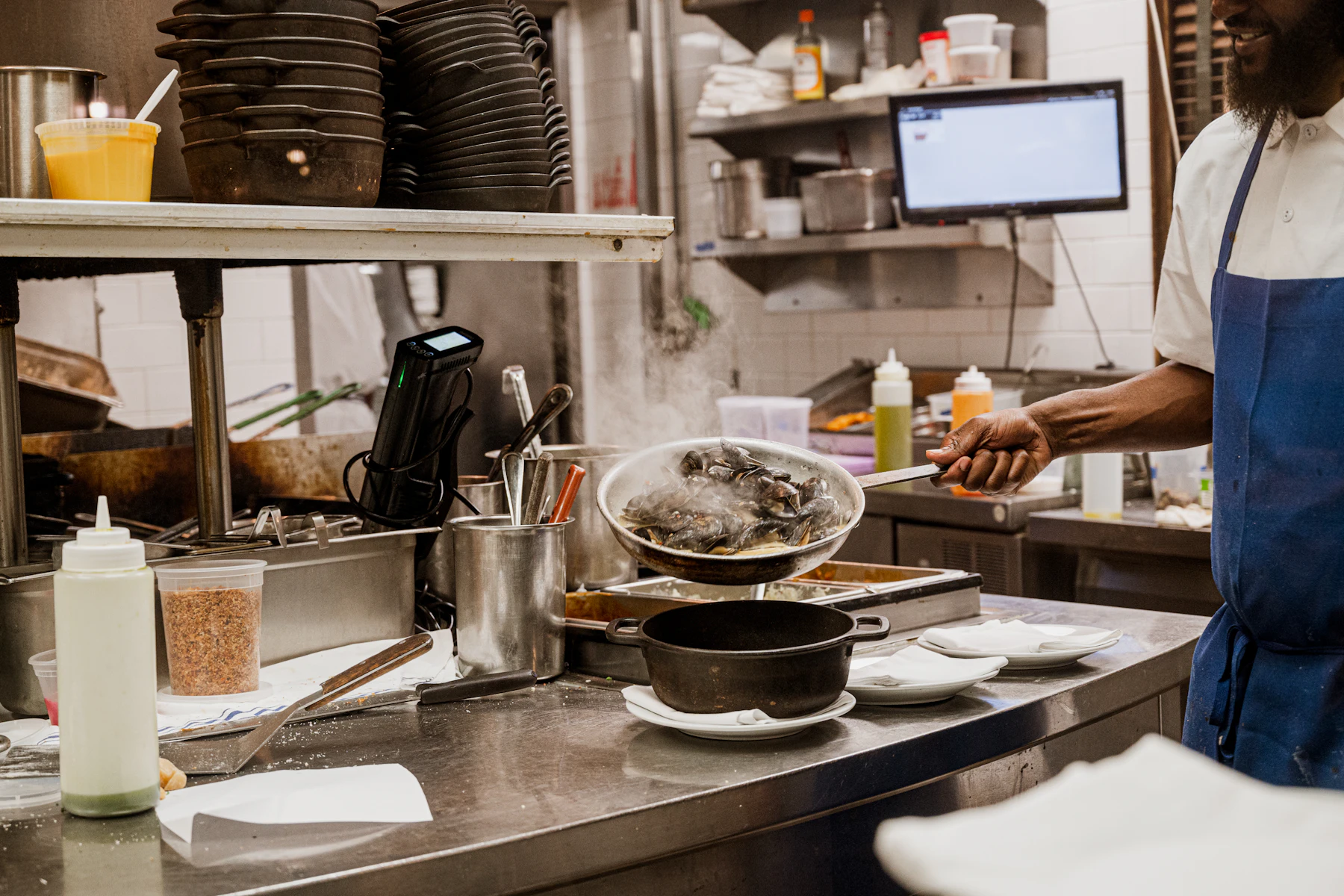
What Financing Can a Restaurant Get, and How Fast?
A restaurant with 12 months of operating history and at least $20,000 a month in revenue can access a merchant cash advance or working capital loan of $10,000 to $1,000,000, priced at a factor rate starting at 1.08 and funded same day to 48 hours. Because card sales are high and daily, restaurants are among the easiest files to underwrite on a percentage-of-sales holdback. Equipment financing covers the full purchase amount of kitchen equipment, with the equipment as collateral. A business line of credit needs a year in business and $250,000+ annual revenue at 650+ FICO.
Why Restaurant Financing Is Its Own Problem
The 2026 industry picture is a volume story wrapped around a cost story. The National Restaurant Association projects $1.55 trillion in restaurant and foodservice sales for 2026 on real sales growth of just 1.3%, with employment reaching 15.8 million jobs.1 Demand is there. Margin is not: 42% of operators reported their restaurant was not profitable last year, and more than nine in ten cite food, labour, insurance, energy and swipe fees as significant challenges.1
The squeeze is measurable. Total restaurant expenses have risen 36% since before the pandemic, wholesale food prices 35%, and average hourly earnings of restaurant employees 41%, while menu prices went up 36% — on a pre-pandemic independent-restaurant margin of roughly 5% of sales.2 In the twelve months to March 2026, 82% of operators reported higher food costs than the year before and only 6% saw any decline.3
What that means for borrowing: on a 5%-of-sales margin, financing has to be sized against the specific thing it unlocks — a fixed repair, a buildout, a seasonal inventory buy — not against a general hope that next quarter is better. Borrow to a dated, costed event.
Which Product Fits Which Problem
| The problem | Product | Why it fits |
|---|---|---|
| Walk-in dies on a Friday | Merchant cash advance | Same day to 48 hours; repayment comes off card sales, so a slow week costs less |
| Payroll gap before a known busy period | Working capital loan | Same-day approval, 3 to 24 months, sized to monthly deposits |
| New oven, hood, POS or refrigeration | Equipment financing | Full purchase amount, asset is the collateral |
| Seasonal swings you can predict | Business line of credit | Draw and repay repeatedly; pay only for what you use |
| Second location or major buildout | Business term loan or SBA | Longer terms and lower rates, but 2 years trading and 680+ FICO for SBA |
Restaurants are the original merchant cash advance use case for a structural reason: card volume is high, daily and verifiable, so a percentage holdback tracks real trading. That also means a restaurant should push hard on the holdback percentage, because it is the number that determines whether a bad January is survivable.
What Operators Are Financing in 2026
Operator behaviour under cost pressure is documented: among full-service restaurants 90% raised prices, 63% sought alternative suppliers and 60% removed menu items; among limited-service, 85% raised prices, 51% changed suppliers and 43% cut items.3 Two of those — changing suppliers and re-engineering the menu — often need money first: a bulk buy at a better price, a piece of equipment that makes a cheaper ingredient work, a supplier who wants payment on delivery instead of terms.
Also worth noting for anyone importing: 68% of operators said tariffs contributed to higher food and beverage expenses.3 If your cost spike is tariff-driven it is unlikely to reverse on its own, which argues for financing a supply-chain change rather than bridging the gap repeatedly.
What a Restaurant Needs to Qualify
- 12 months in operation and at least $20,000 a month in revenue
- 500 FICO or above for an advance or working capital loan; 650+ for a line of credit
- Business bank statements Typically 3 months; some states require 4.
- Government-issued photo ID and a voided business check
- Card processing statements help but are not always required
Applying takes about five minutes and runs a soft pull, which does not affect your personal credit score. No fee, no obligation.
Types Of Restaurant Financing Compared
Five products cover almost every restaurant need. They differ mainly in speed, in what the funder reviews and in how long you have to repay.
| Type | Typical speed | What gets reviewed | Best use in a restaurant |
|---|---|---|---|
| Merchant cash advance | Same day to 48 hours | Card sales and bank deposits | An emergency repair or a short gap |
| Working capital loan | Same day to 48 hours | Monthly deposits | Payroll, food cost, a seasonal build |
| Equipment financing | 48 to 72 hours | The equipment, revenue and credit | Ovens, hoods, refrigeration, POS |
| Business line of credit | Days | Revenue, time in business and credit | Recurring swings between busy and slow weeks |
| Business term loan or SBA loan | Days for a term loan; 30 to 60 days for SBA | Full financials and credit | A remodel, a buildout or a second location |
SBA loans go up to $5 million and usually cost least, but they are the slowest route. Compare every product on the loan types page.
How Much Can A Restaurant Qualify For?
Amounts run from $10,000 to $1,000,000 and are sized mainly on what the restaurant deposits each month. Four things move the number:
- Average monthly deposits and card volume. This is the starting point for every offer.
- Consistency. Steady weeks support a larger amount than the same total arriving in two spikes.
- Existing obligations. Any advance or loan already remitting from the account reduces what a new funder will add.
- Time in business. More history widens both the amount and the product menu.
For a worked example, see $100,000 funded in 24 hours for a Dallas restaurant and how much business funding you can qualify for.
How To Apply In Four Steps
- Apply online. About five minutes, with a soft pull that does not affect your personal credit score.
- Send your statements. Recent business bank statements, plus card processing statements if you have them.
- Review your options with a specialist. One dedicated specialist shows you each offer and explains the total payback and the holdback or payment.
- Sign and get funded. Same day to 48 hours for an advance or working capital loan on a qualifying application.
Pros And Cons Of Restaurant Financing
| Pros | Cons |
|---|---|
| Fast enough to fix a problem before the weekend | Short-term products cost more than bank or SBA financing |
| Reviewed on sales, so credit from 500 can qualify | Daily or weekly remittances reduce cash on hand |
| A percentage holdback falls in a slow week | On a thin margin, an oversized advance is hard to carry |
| No need to change your card processor | Most agreements include a personal guarantee |
Five Pitfalls To Avoid
- Using short-term money for a long-term asset. A buildout financed over months instead of years strains every week until it is paid.
- Stacking advances. Two remittances on the same daily deposits is the most common way a manageable advance becomes a problem.
- Looking at the payment and not the total payback. Ask for the total dollar cost in one number.
- Accepting the first holdback percentage offered. It decides whether a slow January is survivable.
- Borrowing without a dated purpose. Tie the amount to a specific repair, purchase or season.
Restaurant Deals Funded Through RAN Funding
Two restaurant files placed through RAN Funding. Business names are removed; amounts and outcomes are real. More in funded deals.
$100,000 for a Dallas Restaurant With an Existing Position
- Funded
- $100,000
- Detail
- 24 hours
Outcome: Funded without paying off the position the restaurant already held.
$250,000 Consolidation Refinance for a Manhattan Restaurant
- Funded
- $250,000
- Detail
- Refinance
Outcome: Two existing positions paid off and replaced with one facility.
Common Questions
Can a restaurant get funding with bad credit?
Yes. Merchant cash advances and working capital loans accept credit scores from 500, because they are underwritten primarily on business bank statements and card volume rather than the personal credit file. Twelve months in business and at least $20,000 monthly revenue are the binding requirements.
How fast can a restaurant get money?
Same day to 48 hours for a merchant cash advance or working capital loan on a qualifying application. Equipment financing typically funds in 48 to 72 hours. SBA loans take 30 to 60 days.
What is a holdback and how does it work in a restaurant?
A holdback is the fixed percentage of daily card sales remitted toward a merchant cash advance. Because it is a percentage, the dollar amount falls in a slow week and rises in a busy one, while the total owed stays fixed. The percentage is the single most important number to negotiate.
Can I finance a restaurant buildout or a second location?
A business term loan or an SBA loan is the better structure for a buildout, because the terms are years rather than months. Both require stronger credit and more history: SBA needs 2 years in business and a 680 score. An advance is the wrong instrument for a multi-year asset.
Do I need to change my card processor?
No. RAN Funding is a broker arranging financing through a lender network; nothing in the process requires switching processors. If an offer is conditioned on a processor change, ask why before you sign.
What can a restaurant business loan be used for?
Any business purpose: payroll, food and beverage inventory, equipment, repairs, marketing, a remodel, a patio or a second location. Equipment financing is the exception, since it can only pay for the equipment.
Can I use a business loan to buy an existing restaurant?
Yes, but an acquisition is a multi-year investment, so a business term loan or an SBA loan is the right structure. SBA loans go up to $5 million and typically take 30 to 60 days.
What credit score does a restaurant need?
From 500 for a merchant cash advance or working capital loan, 650 or above for a business line of credit, and 680 for an SBA loan.
How much can a restaurant borrow?
From $10,000 to $1,000,000, sized mainly on average monthly deposits and card volume, less whatever the restaurant is already repaying.
How should I prepare before applying?
Have your recent business bank statements ready as full PDFs, know the exact amount and what it pays for, and list any financing you are already repaying. Clean, complete files are decided fastest.
Sources
- 2026 State of the Restaurant Industry — National Restaurant Association, 12 February 2026
- Elevated costs continue to pressure restaurant profitability — National Restaurant Association, 8 July 2026
- Rising food costs and tight supplies mean more challenges for the industry — National Restaurant Association, 25 March 2026
See What You Qualify For
One application, about five minutes, soft pull only. A funding specialist comes back with the offers you qualify for — and explains every term before you sign.