
Industry · Cleaning and janitorial
Cleaning and Janitorial Company Business Loans: Payroll, Equipment, Contracts and Growth
Cleaning and janitorial companies run on labor: payroll goes out every week while commercial clients pay in 30 to 60 days, and a new contract means hiring and equipment before the first invoice clears. Lenders understand this business when the file is presented right. This guide covers what cleaning companies borrow for, which products fit a labor-heavy, contract-driven business in October 2026, what the money costs with Prime at 7.00%, and how to qualify from a year in business (sometimes six months).
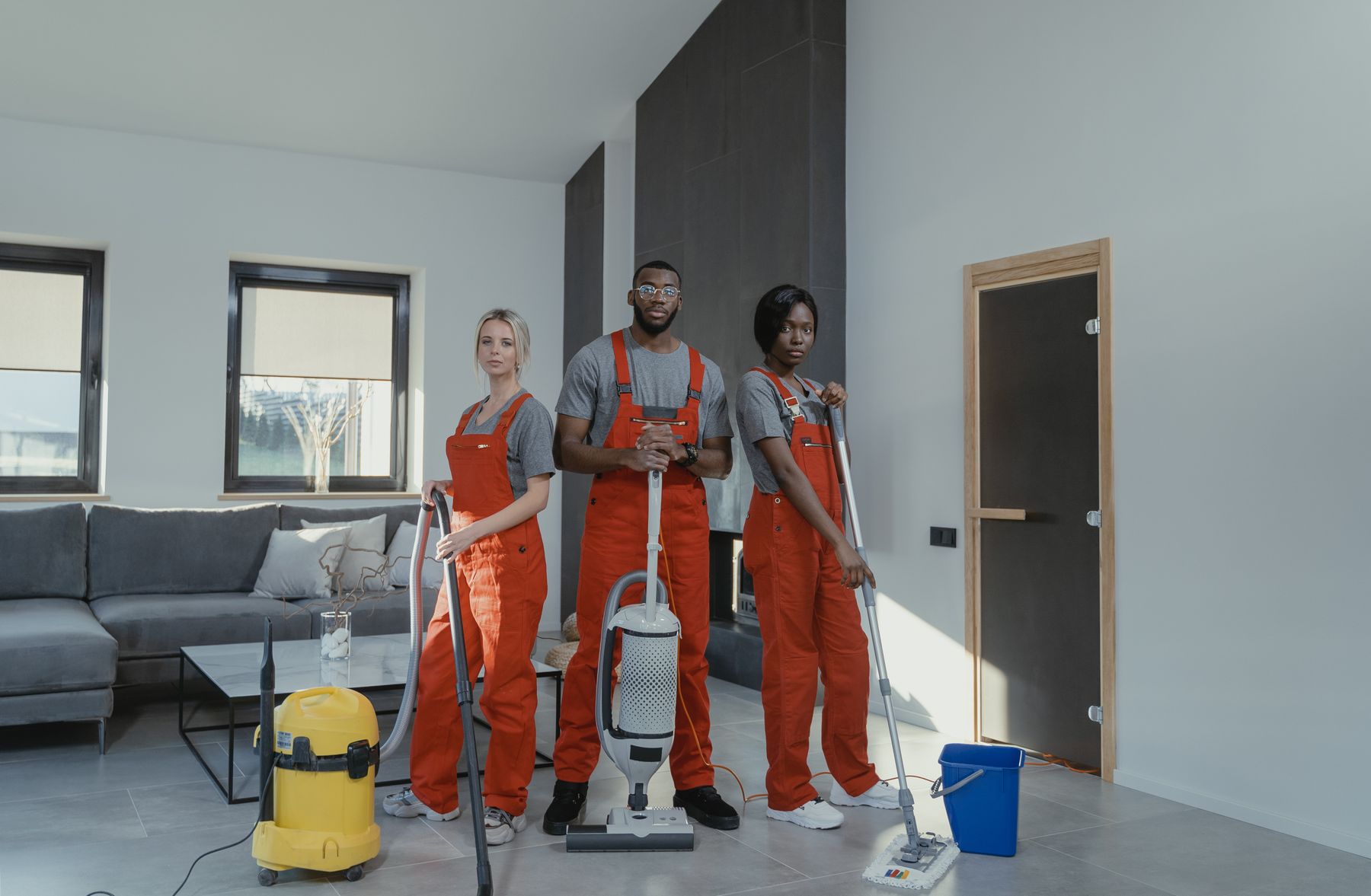
Can a Cleaning Company Get a Business Loan?
Yes. Cleaning and janitorial companies with a year or more in business (sometimes six months), $20,000 or more a month in deposits and personal credit from about 500 qualify for revenue-based financing; from 600 for an online line of credit or term loan; and from 680 with two years of returns for a bank or SBA loan. Companies that invoice commercial clients can also factor those invoices, which funds payroll against receivables without a loan. Typical needs are payroll during the gap between service and payment ($15,000 to $75,000), equipment and vehicles ($10,000 to $150,000), and the hiring and supplies a new contract requires. The best fit for most cleaning companies is a line of credit for the recurring payroll gap, equipment financing for floor machines and vans, and factoring once commercial contracts dominate.
What Cleaning Companies Borrow For
The money is almost always about timing: labor and supplies go out before commercial clients pay.
| Need | Typical amount | Best-fit product | Why |
|---|---|---|---|
| Payroll while waiting on net-30/60 clients | $15K – $75K | Line of credit or invoice factoring | Draw only what the gap needs; factoring scales with contracts |
| Floor machines, pressure washers, vans | $10K – $150K | Equipment financing | Equipment is the collateral; 2 – 7 day funding |
| Staffing up for a new commercial contract | $25K – $100K | Term loan or revenue-based financing | Fixed need before the first invoice clears |
| Bidding bonds, insurance, licensing | $5K – $25K | Line of credit | Short, repeatable gaps |
| Buying a route or a competitor | $50K – $500K | SBA 7(a) or term loan | Longest terms at the lowest cost for qualified files |
Business Funding Products That Fit Cleaning Companies
Cleaning companies rarely have hard collateral beyond vehicles, so deposit-based products carry most of the volume; factoring becomes the cheapest tool once commercial invoices are steady.
| Product | Amounts | Cost at Prime 7.00% | Minimums | Funds in |
|---|---|---|---|---|
| Business line of credit | $10K – $250K online; more secured | 1.5% – 3% per draw (online); Prime + 1 to 4 bank | 6 mo, 600+, $20K/mo | 1 – 3 days |
| Term loan | $20K – $500K | 10% – 36% APR online; 7% – 11% bank | 12 mo, 600+, $20K/mo | 2 – 5 days |
| Revenue-based financing | $10K – $1M | Factor 1.15 – 1.45 | 6 mo, 500+, $20K/mo | 24 – 48 h |
| Equipment financing | $10K – $5M | 9.9% – 24% (6% – 12% bank) | 6 – 12 mo, 550 – 600+ | 2 – 7 days |
| Invoice factoring / A/R line | $20K – $5M | 1% – 4% per 30 days | B2B invoices, creditworthy customers | 3 – 7 days |
| SBA 7(a) | $50K – $5M | 10.00% – 13.50% | 2 yrs, 680+, no open advances | 30 – 60 days |
Current ranges by product and lender are in business loan interest rates; what each product requires is in business loan requirements.
How Lenders Read Cleaning Company Files
- Deposits matter more than profit. Lenders size the loan at one to one and a half times average monthly deposits, so route every client payment through one business account.
- Contract mix is a strength. Recurring commercial contracts (offices, medical, property managers) read as predictable revenue; residential one-offs read as volatile. Show the contracts.
- Payroll timing explains low balances. A balance that dips every other Friday is normal for this trade; a letter noting the payroll cycle prevents a decline for “low average balance.”
- Vehicles and equipment are collateral. Titled vans and commercial floor equipment support equipment loans at lower rates than unsecured money.
- Returned payments are the fastest decline. More than three NSFs in 90 days ends most online files; keep the account clean for 60 to 90 days before applying.
Share of applicants fully approved, by product (Federal Reserve, 2026)
81% of applicants were approved for at least part of the request. Source: Federal Reserve Banks, 2026 Report on Employer Firms.
What $50,000 Costs Cleaning Companies
| Option | Pricing | Term | Payment | Total cost |
|---|---|---|---|---|
| Bank line of credit | 9% interest-only | 90 days drawn | $375/month | $1,110 |
| Online line of credit | 2.5% per draw | 12 months | ~$985/week | $1,250 |
| Online term loan | 24% APR + 5% origination | 18 months | $3,500/month | $13,040 |
| Revenue-based financing | Factor 1.22 | 8 months | ~$350/business day | $11,000 |
| Equipment financing | 12% | 4 years | $1,317/month | $13,200 |
Total cost of $50,000, by option
Illustrative at October 2026 pricing. Compare total payback against the margin the money produces, not the rate alone.
Model your own numbers in the payment calculator and the qualification estimator.
How RAN Funding Places Cleaning Company Deals
We place cleaning and janitorial files every week: payroll gaps, floor-equipment purchases and contract ramps. One application goes to the funders in our network that fit a labor-heavy, contract-driven file, and we show you the approvals with total payback so a factoring line, a credit line and an advance can be compared on the same page.
- Apply once with a soft pull and the last three months of business bank statements (four in NY, CA or VA).
- A specialist reads the file the same day and presents it to the best-matched funders in our network for the best deal.
- You see the approvals side by side with total payback, payment and term, and decide.
- Funding in 24 hours to 5 days on most products; SBA in 30 to 60 days.
¿Prefiere español? Lea esta guía en español.
Common Questions
How much can a cleaning company borrow?
Online and revenue-based lenders size at one to one and a half times monthly deposits: a company depositing $30,000 a month usually sees $30,000 to $45,000. Factoring advances 70% to 90% of eligible commercial invoices, and equipment loans cover up to 100% of the equipment cost.
Can I get funding with mostly 1099 cleaners?
Yes. Lenders look at deposits and contracts, not how staff are classified. Keep payroll and contractor payments documented so the cash-flow story is clear.
Is invoice factoring better than a loan for a cleaning business?
For commercial contracts on net-30 or net-60 terms, factoring is usually cheaper and grows with the contracts; for residential or card-paid revenue, a line of credit or revenue-based financing fits better.
What credit score does a cleaning company need?
About 500 for revenue-based financing, 600 for online lines and term loans, 680 for bank and SBA loans. Equipment financing often approves from 550 to 600 because the equipment secures it.
Is RAN Funding a lender?
No. RAN Funding is a business financing broker. We present your application to the funders in our network that fit your profile and show you the approvals that come back; the funding partner sets the approval, amount, rate, fees and terms. RAN Funding is paid by the lender, not by you.
Sources
- 2026 Report on Employer Firms: Findings from the 2025 Small Business Credit Survey — Federal Reserve Banks
- H.15 Selected Interest Rates (bank prime loan rate 7.00%) — Board of Governors of the Federal Reserve System
See What You Qualify For
One application, about five minutes, soft pull only. A funding specialist tells you up front which products fit your file, what they cost and how fast each one funds.
More on Service Business Financing