
SBA loans
How to Apply for an SBA Loan in 2026: A Step-by-Step Guide
Seven steps from “should I?” to money in the account, with the exact forms, the documents to gather before you talk to anyone, the mistakes that add weeks, and what changed in the application under the October 2026 rules.
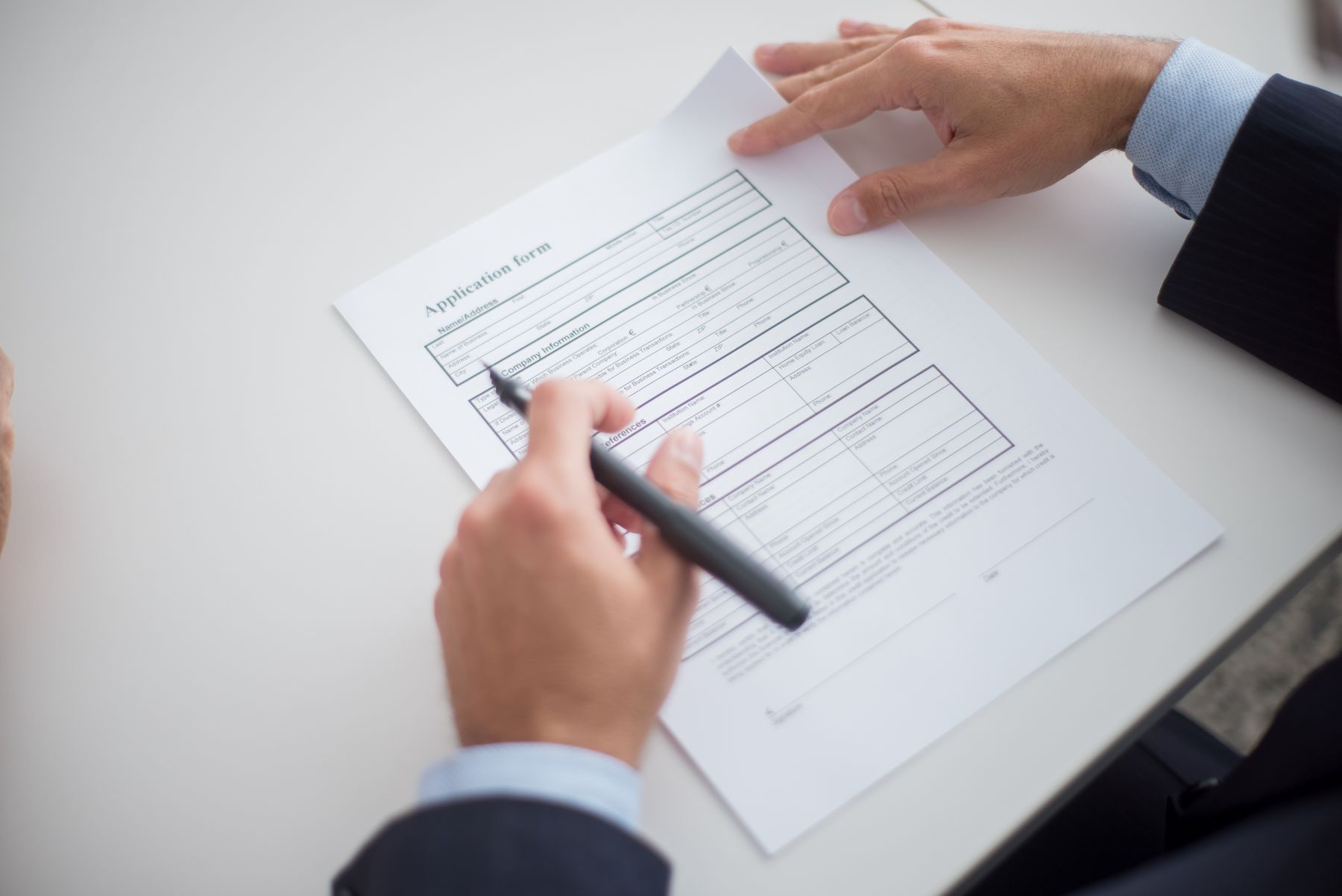
How Do You Apply for an SBA Loan?
You apply through an SBA-approved lender, not through the SBA. The process in 2026: confirm you meet SBA eligibility and the lender’s credit bar (two years in business, 680+ credit, cash flow covering the payment at 1.10x or more); pick the right program (7(a), Express or 504) and the right lender for your industry and loan size; gather the document package — two years of business and personal tax returns, year-to-date financials, bank statements, a debt schedule and SBA Form 1919; complete the lender’s application and the personal financial statement (Form 413, dated within 90 days); answer underwriting questions within a day; clear closing conditions; and fund. With a Preferred Lender and a complete file, plan on 30 to 60 days. RAN Funding handles steps one through five for you and places the file with the lender most likely to approve it.
Before You Apply: Three Questions
- Does the business pass SBA eligibility? For-profit, U.S.-based, inside SBA size standards, 100% owned by U.S. citizens or nationals (a 2026 rule, currently under legal challenge), no delinquent federal debt, no owner facing charges. These are pass/fail. See SBA loan requirements.
- Does it pass the lender’s bar? Roughly: two years of tax returns, 680+ personal credit for every 20%+ owner, net operating income that covers all debt payments including the new loan by at least 1.10x (1.25x if you are buying a business), no open collections or recent bankruptcy, and 10% equity if it is a start-up or a purchase.
- Can you wait 30 to 90 days? If the need is this month, start a term loan or line of credit in parallel and let the SBA loan follow.
The seven steps and how long each takes
Total: 30–60 days with a Preferred Lender on a complete file; 60–90 days otherwise.
Step 1: Get Pre-Qualified (Soft Pull)
Before any hard credit inquiry, have someone who knows SBA lending look at your last two returns, three months of bank statements and a credit snapshot and tell you whether SBA is realistic and at what size. This is the step most owners skip and the one that saves the most time. RAN Funding does it as a soft inquiry in a day; the answer is either “SBA, here is the lender” or “not yet, here is what fits now and what to fix.”
Step 2: Choose the Program and the Lender
| Need | Program | Why |
|---|---|---|
| Working capital, equipment, refinancing, $50K–$5M | 7(a) Standard | The all-purpose loan; up to 10 years, 25 for real estate |
| Up to $500,000, fast, or a revolving line | SBA Express | 50% guarantee, SBA answers in 36 hours, closes in 2–4 weeks |
| Buying or building owner-occupied property, heavy equipment | 504 | Fixed rate for 10–25 years; pair with a 7(a) for working capital |
| $50,000 or less, newer business | Microloan | Non-profit intermediaries; flexible credit standards |
Then pick one lender, not five. Lenders differ sharply in loan size, industry appetite and speed, and in 2026 several large banks cut their SBA volume by half. Match your file to a Preferred Lender that is actively approving loans like yours; see the best SBA lenders of 2026 and 7(a) vs 504.
Step 3: Gather the Document Package
Assemble everything below before you submit. A complete package on day one is the single biggest time saver in the entire process.
| Document | Details | Freshness |
|---|---|---|
| SBA Form 1919 (Borrower Information Form) | One per owner of 20%+ and per key manager; eligibility questions | Signed at application |
| SBA Form 413 (Personal Financial Statement) | Assets, liabilities, income for each 20%+ owner and guarantor | Within 90 days (new in October 2026) |
| Business tax returns | Last 2 years (3 for some lenders), all schedules | Must match IRS transcripts |
| IRS Form 4506-C | Authorizes the lender to pull transcripts | Signed at application |
| Personal tax returns | Last 2 years for each 20%+ owner | Must match transcripts |
| Year-to-date P&L and balance sheet | Interim financials | Within 120 days |
| Business bank statements | Last 3–6 months, all operating accounts | Current |
| Business debt schedule | Every loan, lease, line and advance: lender, balance, payment, collateral | Current |
| Entity documents | Articles, operating agreement or bylaws, EIN letter, licenses, lease | Current |
| Use-of-funds memo and projections | One page on what the money does; 12–24 month projections for larger or complex requests | At application |
| Government ID and voided business check | Each owner; the business account | At application |
| Purchase agreement, valuation, seller financials | Business purchases only; QoE report on $3M+ purchases | At application |
Step 4: Submit the Application
You will complete the lender’s own application alongside the SBA forms. Expect questions on ownership, affiliates (other businesses you own count toward size standards and get their own financials), use of funds line by line, collateral and insurance. Answer every question, even the awkward ones. A prior bankruptcy, a tax lien that has been paid, a slow year — disclosed with a one-paragraph explanation, these are workable. Discovered in underwriting, they restart the clock or end the file.
- Submit everything as one organized package, labeled, in the order of the lender’s checklist.
- Have one point of contact on your side who answers the lender the same day.
- Expect a hard credit pull on every 20%+ owner at this stage.
Step 5: Underwriting
The lender’s credit team verifies transcripts, runs credit, confirms business debts against two months of statements, calculates debt service coverage, values collateral and writes a credit memo. Questions come back in rounds — usually two or three. This stage takes two to four weeks on a clean file and is where incomplete files lose a month. If the use of funds involves real estate, the appraisal and environmental report are ordered here; for a purchase, the valuation and, above $3 million, the quality-of-earnings report.
What underwriters are testing in 2026: coverage of at least 1.10x (1.25x on acquisitions) on trailing results; a verified 10% equity injection where required; collateral pledged where available; and that nothing in the file contradicts anything else. See how long an SBA loan takes.
Step 6: Approval, Commitment and Closing
A Preferred Lender approves internally and obtains an SBA loan number, often the same day; a non-PLP lender sends the file to the SBA, which can add two to three weeks. You then receive a commitment letter listing every closing condition: insurance binders (hazard insurance on collateral over $50,000; sometimes life insurance), entity resolutions, landlord waivers, proof the equity injection is in place, lien filings, and the guaranty fee (usually financed). Read the SBA Form 159 fee disclosure and the note’s prepayment terms before you sign. See SBA loan fees explained.
Step 7: Funding
Once every condition clears, funds are wired — directly to your account for working capital, or to escrow for a purchase or property closing. Keep the use of funds consistent with what you applied for; lenders can audit it. Then set a reminder: 7(a) loans are variable in most cases, so your payment will move with Prime.
Seven Mistakes That Add Weeks
- Applying to several lenders at once (multiple hard pulls, conflicting files).
- Submitting returns that were later amended without the amendment.
- Daily-pay merchant cash advances left in place, crushing the coverage ratio. An SBA loan cannot refinance them, so clear them first.
- An equity injection borrowed from the business or deposited without a source.
- Personal financial statements older than 90 days.
- A franchise not listed in the SBA Franchise Directory.
- Picking a lender by brand instead of by current appetite for your industry and loan size.
How RAN Funding Runs the Application for You
RAN Funding is a broker. We pre-qualify you with a soft pull, choose the program and the lender, build the document package to that lender’s checklist, submit it, and keep the file moving through underwriting and closing with one specialist on your side. Our SBA screen is two years in business, $250,000+ annual revenue on two years of business tax returns, 680+ credit, no bankruptcies and no outstanding collections. If you clear it, we place the file; if you do not, we tell you on the first call and show you the products that fund in 24 to 72 hours while you get there. Start the five-minute application or call 877-522-6045.
¿Prefiere español? Lea esta guía en español.
Common Questions
Can you apply for an SBA loan directly with the SBA?
No. The SBA guarantees loans but does not make them (outside disaster programs). You apply through an SBA-approved bank or non-bank lender, or through a broker that packages the file and places it with one.
What forms are needed to apply for an SBA loan?
SBA Form 1919 (borrower information) for each 20%+ owner, SBA Form 413 (personal financial statement) dated within 90 days, IRS Form 4506-C for transcripts, plus the lender’s own application. The lender adds its document checklist: tax returns, financials, bank statements, debt schedule and entity documents.
How long does the SBA loan application process take?
Plan on 30 to 60 days from a complete application to funding with a Preferred Lender, 60 to 90 days with a lender that must send the file to the SBA, two to four weeks for SBA Express, and 60 to 120 days for a 504 real estate loan.
Does applying for an SBA loan hurt your credit?
The lender makes a hard inquiry on each owner’s personal credit when it underwrites the file, which can cost a few points. Pre-qualifying through RAN Funding is a soft inquiry and does not affect your score.
What is the easiest way to apply for an SBA loan?
Pre-qualify first, pick one Preferred Lender that already lends in your industry and at your loan size, and submit a complete, organized package on day one. A broker that does this for you removes most of the friction and the most common reason for a decline: the wrong lender.
Sources
- 7(a) loan program — U.S. Small Business Administration
- How to apply for an SBA loan in 5 steps — NerdWallet
- SOP 50 10 8.1 changes effective 1 October 2026 — StatementsReady
- Procedural Notice 5000-876777: Sunset of SBSS Score for 7(a) Small Loans — U.S. Small Business Administration, via NAGGL
See What You Qualify For
One application, about five minutes, soft pull only. A funding specialist tells you up front whether SBA is realistic for your file — and which faster products fit if it is not.