
Receivables financing · Manufacturing
Manufacturing Factoring: Turn Net-30 to Net-90 Invoices Into Cash
Manufacturers pay for materials, labor and freight weeks before an OEM, distributor or retailer pays the invoice. Manufacturing factoring closes that gap: you sell approved invoices to a factoring company, get 80% to 95% of their value within a day or two and receive the rest, minus a fee, when your customer pays. This guide covers how it works for manufacturers, what it costs on a real invoice, what factors check and when another product fits better.
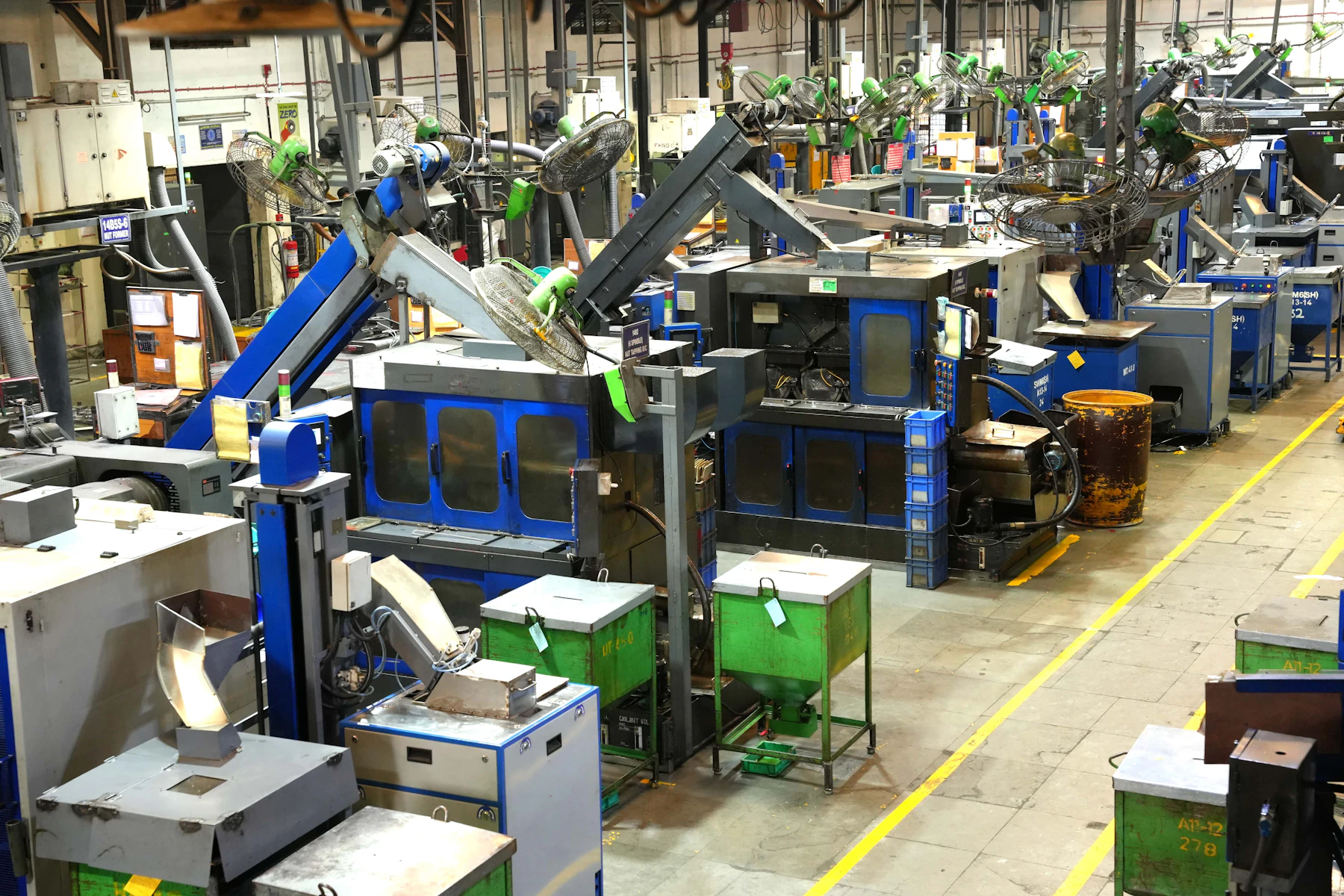
What Is Manufacturing Factoring?
Manufacturing factoring is invoice factoring for producers that sell on terms to other businesses. The factor buys your open invoices to creditworthy customers, advances 80% to 95% of each one, collects from your customer on its normal 30- to 90-day terms and releases the reserve minus a fee that typically runs 1% to 4% for every 30 days the invoice is open. Approval rests mainly on your customers’ credit, so it suits manufacturers growing faster than their bank line, taking on larger orders or waiting on slow-paying OEM and big-box accounts. Facilities through RAN Funding run from $10,000 to $5 million.
How Manufacturing Factoring Works
- Ship and invoice. You deliver finished goods and invoice your customer on its usual terms.
- Submit the invoice. You send the factor the invoice with proof of delivery, such as a signed delivery receipt or bill of lading.
- Verification. The factor confirms the order and delivery with your customer.
- Advance. You receive 80% to 95% of the invoice, usually within 24 to 48 hours of verification.
- Customer pays the factor. Your customer receives a notice of assignment and pays the factor directly; under UCC § 9-406, once notified, the customer must pay the factor to discharge the invoice.
- Reserve released. The factor sends you the remaining balance minus its fee.
Illustration with a 90% advance and a 1.5% fee per 30 days; your advance rate and fee depend on volume and customer credit.
What Manufacturing Factoring Costs: A $150,000 Example
| Item | Amount |
|---|---|
| Invoice to an OEM customer, net 60 | $150,000 |
| Advance at 90% | $135,000 on day 1 or 2 |
| Fee at 1.5% per 30 days, paid on day 60 | 3% = $4,500 |
| Reserve released after payment | $10,500 |
| Total you receive | $145,500 |
Illustration only. Your advance rate and fee depend on monthly volume, customer credit and how fast customers pay.
The headline rate is only part of the cost. Ask every factoring company for these in writing before you sign:
- Setup, due-diligence or application fees
- Wire, ACH, lockbox or credit-check fees per invoice or per customer
- Monthly minimum volume and the fee if you fall short
- Contract length, auto-renewal and the termination notice period and fee
Rates by volume tier are in our guide to invoice factoring rates.
Which Manufacturers Factoring Fits
Factoring works best for manufacturers that:
- Sell to other businesses or government agencies with good payment histories: OEMs, distributors, retailers, contractors
- Invoice $30,000 to $500,000 or more a month, the range where factors compete hardest on price
- Offer payment terms of 30 to 90 days
- Have 12+ months in business and clean invoices for delivered goods
- Are taking on orders faster than working capital or a bank line can support
It is the wrong tool if you sell mainly to consumers, invoice before goods ship (progress billing or bill-and-hold), or have large unresolved disputes with customers.
What Factors Look at in a Manufacturing File
- Customer concentration. Most factors cap any one customer at 25% to 50% of the facility. A manufacturer selling mostly to one OEM may need a factor that underwrites that customer specifically.
- Deductions and chargebacks. Big-box and chain customers deduct for compliance, shortages and returns. Factors may hold a larger reserve for those accounts.
- Delivered goods only. Invoices must be for finished, delivered goods. Progress billing, deposits and pre-billed orders are usually not eligible.
- Foreign customers. Export receivables often need credit insurance or a factor that works internationally.
- Existing liens. A bank line or merchant cash advance with a lien on receivables must be paid off or subordinated. An equipment lender’s lien is usually limited to the equipment, so it rarely blocks factoring, but the UCC filing has to say so.
- Tax status. Unpaid payroll taxes or federal tax liens usually stop a deal until they are resolved.
Large Orders: Factoring Plus Purchase Order Financing
When a large order needs materials or components before you can produce it, purchase order financing can pay the supplier directly. Once the goods ship and you invoice, factoring advances against that invoice and repays the purchase order funder. PO financing fits best when a supplier produces most of the finished goods; manufacturers with in-house production more often pair factoring with equipment financing or a working capital loan for materials.
Factoring vs Other Manufacturing Financing
| Option | Based on | Speed | Best for |
|---|---|---|---|
| Invoice factoring | Your customers’ credit | 3 – 7 days to set up, then 24 – 48 hours | Fast growth, slow-paying customers |
| A/R or asset-based line | Receivables and often inventory | 2 – 6 weeks | Larger, stable manufacturers |
| Equipment financing | The machine itself | 1 – 3 days | New lines, CNC, presses, vehicles |
| Working capital loan | Bank deposits | 24 – 48 hours | Short gaps, materials, payroll |
| SBA 7(a) loan | Full financials | 30 – 90 days | Lowest cost on planned needs |
What You Need to Apply
- An accounts receivable aging report and a customer list with contact details
- Recent invoices with proof of delivery (signed delivery receipts or bills of lading)
- The last 3 months of business bank statements (4 months in NY, CA or VA)
- Articles of organization, your EIN and a government ID for each owner
- Any current factoring, lender or merchant cash advance agreements, so liens can be cleared
Common Questions
Is manufacturing factoring a loan?
No. Factoring is the sale of your invoices to a factoring company. Approval rests mainly on your customers’ credit rather than your own, and the facility grows as your invoicing grows.
Will my customers know I use factoring?
Usually yes. In standard factoring your customers receive a notice of assignment and pay the factor. Confidential, non-notification factoring is available for larger, well-established manufacturers.
What is the difference between recourse and non-recourse factoring?
With recourse factoring you buy back an invoice your customer does not pay. Non-recourse factoring shifts the credit risk of a customer’s insolvency to the factor, at a higher fee; it does not cover disputes over quality or delivery.
How fast can a manufacturer get funded?
Setting up a new factoring facility usually takes 3 to 7 days, including customer credit checks and lien searches. After that, verified invoices are typically funded within 24 to 48 hours.
Can I factor if I have a bank line or merchant cash advance?
Yes, if the lender with a lien on your receivables is paid off or agrees to subordinate. Many factoring companies can pay off that balance from your first advance.
How small can a manufacturer be to use factoring?
Factors compete hardest above about $30,000 a month in invoicing. Facilities through RAN Funding start at $10,000 and run to $5 million.
Sources
- 2026 Report on Employer Firms: Findings from the 2025 Small Business Credit Survey — Federal Reserve Banks, 2026
- UCC § 9-406: Discharge of account debtor; notification of assignment — Legal Information Institute, Cornell Law School
RAN Funding at a Glance
RAN Funding is a business financing broker. It is not a lender. One application is compared across a network of banks, SBA lenders, online lenders and revenue-based funders. Funding runs from $10,000 to $2 million, and up to $5 million for SBA loans. Most approved working capital funds in 24 to 48 hours. It works only with businesses registered and operating in the United States. The application uses a soft credit pull, and specialists work in English or Spanish.
See What You Qualify For
One application, about five minutes, soft pull only. A funding specialist reads your statements the same day and tells you which products fit, what each costs and how fast it funds.
More on Factoring