
Industry guide
Coffee Shop Business Loans: Funding for Independent Cafés and Roasters
A coffee shop takes in small payments all day and pays large bills on fixed dates. This guide explains how coffee shop business loans work, what they are used for, and how to choose the right product for equipment, a second location, a slow season or a jump in coffee and dairy costs.
How Do Coffee Shop Business Loans Work?
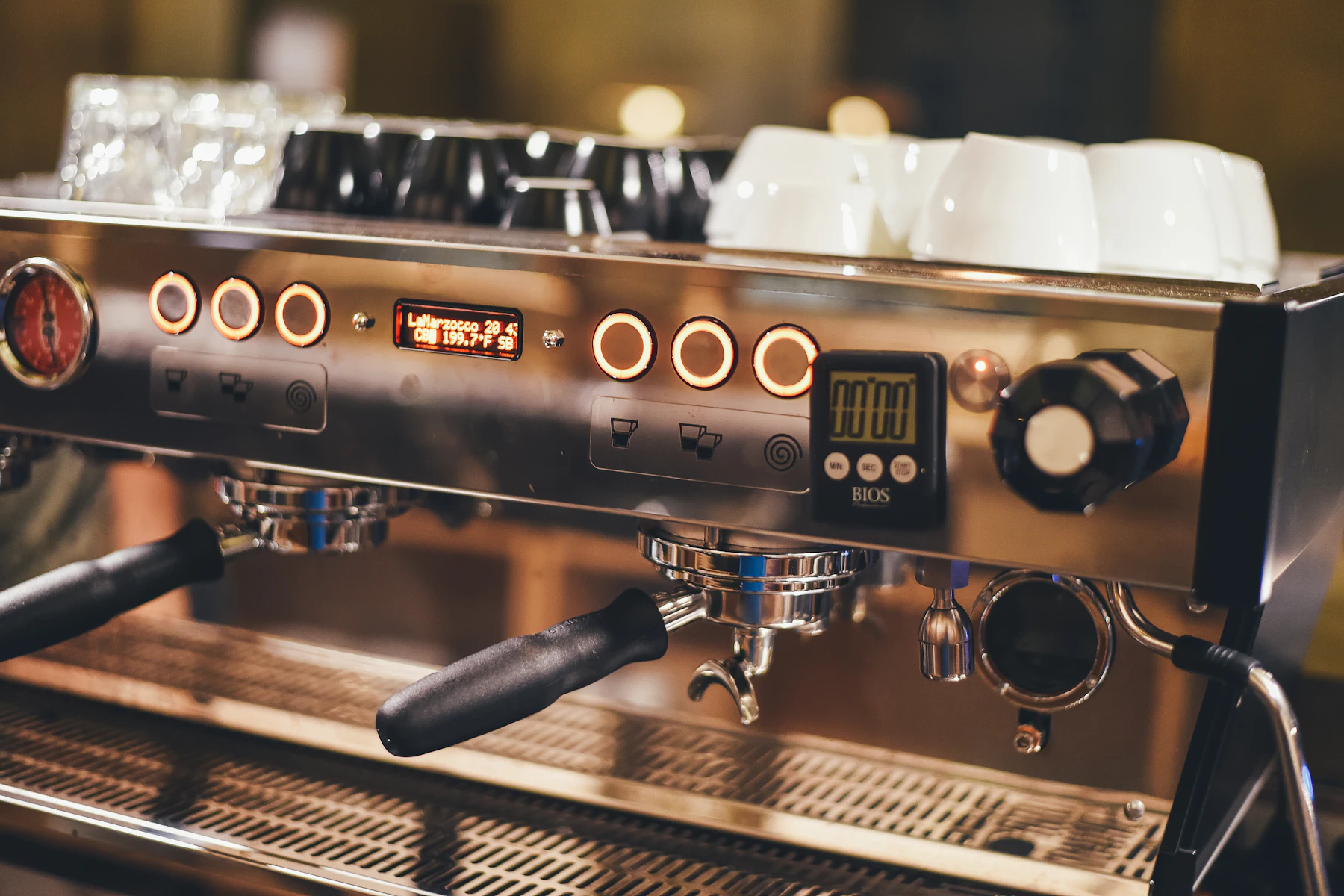
A coffee shop business loan puts cash in the café’s account to buy an espresso machine or roaster, build out a second location, stock green coffee or carry payroll through a slow season. It is repaid over a set term from the shop’s sales. RAN Funding is a business financing company, not a lender: one application for our lender network and one dedicated specialist. Established coffee shops typically receive $20,000–$500,000+, with decisions in hours on complete files and funding in as little as 24–48 hours once approved.
Coffee Shop Funding at a Glance
The short version for a café owner who needs the facts first.
| Item | Details |
|---|---|
| Who we are | RAN Funding, a business financing company. We arrange funding through a network of lenders. We do not lend ourselves. |
| Amounts | $20,000–$500,000+. Larger files: up to $2 million. |
| Speed | Decisions in hours on complete files. Funded in as little as 24–48 hours once approved. |
| Built for | Established businesses: most clients have 1+ year in business and $20,000+ in monthly revenue. |
| To apply | A short application and the last 3 months of business bank statements (4 months in California, New York and Virginia). |
| Common uses | Espresso machines and grinders, a roaster, a second location or drive-thru, green coffee and dairy, barista payroll, slow-season cash flow |
| Typical cash-flow gap | Small tickets every day against large bills on fixed dates: rent, payroll, a green-coffee order, an equipment repair. |
| What we look at first | How steady the daily card deposits are, how deep the slow season runs and what already leaves the account. |
| Contact | 1-877-522-6045, Monday–Friday 9am–6pm ET |
Why Established Coffee Shops Need Funding
A coffee shop sells hundreds of small tickets a day and pays a handful of large bills a month. The demand is there. The timing is the hard part.
This guide is for coffee shops that are already open and trading. Funding to open a first café is not what these programs are built for.
Demand is strong, and it is moving toward the café
The National Coffee Association’s 2026 National Coffee Data Trends Specialty Coffee Report found that 47 percent of American adults had specialty coffee in the past day, more than had traditional coffee (42 percent). Specialty drinkers are also the ones who buy from a shop: 36 percent of past-day specialty coffee drinkers had coffee prepared outside the home, compared with 23 percent of traditional coffee drinkers. Among 25–39-year-olds, 69 percent had specialty coffee in the past week.
That is good news for an independent café. It also raises the bar. Customers expect espresso drinks, cold brew and consistent quality, and all three depend on equipment and trained staff.
Coffee and dairy costs move faster than a menu board
Input costs swing. The Bureau of Labor Statistics reports that consumer prices for beverage materials including coffee and tea rose 11.8 percent from December 2024 to December 2025, the largest increase of any item in its year-end review. The same category rose 13.8 percent in 2022 and only 0.3 percent in 2023. Dairy prices rose 15.3 percent in 2022 and fell 0.9 percent in 2025. These are retail price indexes, not wholesale quotes, but they show how far the two biggest ingredients on a café menu can move in a single year.
A café cannot reprint its menu every month. When green coffee or milk jumps, the shop absorbs the difference until prices catch up. Roasters feel it first, because they buy green coffee in larger lots and hold it.
Sales follow the calendar
Most cafés have a slow stretch. A shop near a campus empties in summer. A beach-town café lives on a few peak months. A downtown shop depends on office traffic. Rent and payroll do not follow the same curve.
What Coffee Shop Financing Is Used For
Café and roastery owners typically put funding to work in these areas.
- Espresso machines and grinders. Replacing a worn machine or adding a second one for the morning rush.
- Cold drink equipment. Ice machines, cold brew systems and refrigeration. The NCA report found 60 percent of past-day specialty coffee drinkers had a cold coffee.
- Roasting equipment. A larger roaster, a destoner or packaging equipment for wholesale and retail bags.
- A second location or a drive-thru. Build-out, permits, signage and opening inventory. See business expansion loans.
- Green coffee and supplies. Buying a larger lot when the price is right, plus milk, cups and syrups. See inventory financing.
- Payroll. Baristas are paid on schedule through a slow month.
- Seasonal cash flow. Covering rent and fixed costs until traffic returns.
Coffee Shop Business Loans: Options and Which Fits Which Need
No single product fits every café need. Match the product to how long the need lasts.
| Need | Best-fit product | Amounts and speed |
|---|---|---|
| A short gap: a slow month, a repair, a supplier bill | Working capital | Decisions in hours on complete files; funded in as little as 24–48 hours once approved |
| Recurring swings in coffee, dairy and supply costs; draw, repay, draw again | Business line of credit | $20,000–$2,000,000; open in 48–72 hours once approved |
| An espresso machine, grinder, roaster or refrigeration | Equipment financing | Depends on the equipment and the lender; your specialist confirms timing |
| A one-time project: a remodel, a drive-thru window, a second location | Business Term Loans | Terms up to 3 years. Larger amounts: up to $2 million funded in as little as 72 hours once approved |
| Card-heavy sales and a need that should flex with daily revenue | Merchant cash advance or revenue-based financing | Decisions in hours on complete files; funded in as little as 24–48 hours once approved |
| A large, planned expansion when time allows | SBA loans | Up to $5 million; typically 30–60 days |
Most coffee shop sales are paid by card, so deposits land every day. That suits revenue-based products, where repayment is tied to sales and eases when a day is slow. A business line of credit suits the weekly rhythm of supply orders. A machine that will work for years belongs on equipment financing or a Business Term Loan, not on the shortest product.
For an SBA loan, the SBA lists short- and long-term working capital, the purchase and installation of machinery and equipment, and furniture, fixtures and supplies among the permitted uses of a 7(a) loan. That covers most of a café expansion, but it takes longer.
How Lenders Look at a Coffee Shop
Lenders in the network read a café file through its bank statements first.
- Daily card deposits. Frequent, steady deposits from the card processor are a strength of the coffee shop model. They show real customers every day.
- Seasonality. A dip in the same months each year is normal. A specialist who knows the industry explains the pattern, so one slow month is not read as a decline.
- Daily balances. Low or negative balance days around rent and payroll get attention.
- Revenue mix. Wholesale roasting accounts, catering and retail bags add deposits that do not depend on foot traffic.
- Existing obligations. Lenders count payments already leaving the account. Several stacked advances limit new options. Our guide to business debt consolidation covers that case.
Cafés are reviewed much like other food service businesses. Our restaurant business loans guide covers the shared ground.
Who Qualifies
Our programs are built for established businesses: most clients have 1+ year in business and $20,000+ in monthly revenue. A busy single-location café often clears that mark. A small kiosk may not.
What makes a coffee shop file strong is consistency. Lenders like to see deposits most days of the week, a balance that stays positive between rent and payroll, and a slow season that looks like last year’s slow season. A café with a wholesale or catering line often shows a steadier pattern. Not every application is approved, and each lender decides on its own.
For a second location financed with an SBA loan, the program is built for businesses with 2+ years in business and $250,000+ in annual revenue shown on two years of business tax returns. See business loan requirements.
What to Have Ready
The core file is short. A few café documents help your specialist size the request.
- A short application.
- The last 3 months of business bank statements (4 months in California, New York and Virginia).
- The legal business name and EIN.
- A photo ID for the owner.
- Recent card processing statements, showing daily sales volume.
- For equipment: the vendor quote for the machine, grinder or roaster.
- For a second location or drive-thru: the lease or letter of intent and the build-out estimate.
- For a seasonal request: last year’s sales by month from your point-of-sale system.
Statements must come from the coffee shop’s business account. Personal bank statements do not count. See how lenders read business bank statements.
Example Scenarios
These examples are illustrative. They are not actual RAN Funding clients.
The machine that would not last another summer
Picture a café near the university in Ann Arbor, Michigan. The espresso machine is nine years old and the repair visits are getting closer together. The owner finances a new two-group machine and two grinders with equipment financing before the fall rush, and keeps the cash reserve for payroll.
The second location
Picture a roaster-café in Tampa, Florida, with three good years behind it. A former bank branch with a drive-thru lane comes up for lease two miles away. A Business Term Loan covers the build-out, the equipment and the opening inventory, and the owner repays it over a set term from two stores’ sales.
The green-coffee order
Picture a small roaster in Asheville, North Carolina, that supplies a dozen restaurants. Its importer offers a full lot of a coffee the roaster uses all year. The owner draws on a business line of credit to buy the lot, then repays the draw as wholesale invoices are paid.
The slow season
Picture a café in Flagstaff, Arizona, that is full when students are in town and quiet when they leave. The owner uses working capital to cover rent and a core staff through the slow weeks, sized to what the busy months can comfortably repay.
What It Costs
We do not print pricing here. It depends on the product, the lender, the term and the coffee shop’s file, and you see every term in writing before you accept.
Faster funding usually costs more in total than bank financing. For a café the question is what the alternative costs. An espresso machine that fails on a Saturday morning means lost sales that day and regulars who try the shop down the street. A good location that goes to another tenant does not come back. Set that against the total amount repaid and the term of each offer.
Then check the margin. Rent and labor are fixed, and coffee and dairy costs move. Funding that makes sense for a machine or a second location may not make sense for covering a loss that repeats every month. When the need can wait, an SBA loan usually costs less in total. Ask your specialist to show the repayment against your average daily deposits before you decide.
Mistakes to Avoid
- Using short-term money for a long-lived asset. A roaster or a build-out should not ride on the shortest product.
- Sizing a request on the best month. Repayment continues through the slow season. Size it on the average.
- Taking several advances at once. Each one draws on the same daily deposits that rent and payroll need.
- Opening a second location before the first is steady. Lenders look at the existing shop’s deposits. So should you.
- Funding a pricing problem. Funding bridges a cost spike. If coffee and dairy stay high, the menu has to change.
- Waiting until the account is overdrawn. Options are wider before a problem shows in the statements. If a bank has already said no, read what to do after a bank decline.
How RAN Funding Works
RAN Funding is a business financing company, not a bank. A coffee shop owner completes one application for our lender network and works with one dedicated specialist.
- Send the file. The application, business bank statements and, if you have them, card processing statements or a vendor quote.
- We read it like a café. Your specialist notes the daily card deposits, the seasonal pattern and any wholesale income, so lenders see the whole business.
- Lenders decide. Decisions come in hours on complete files.
- You choose. Your specialist walks through the total amount repaid and the term. Funds arrive in as little as 24–48 hours once approved.
Call 1-877-522-6045, Monday–Friday 9am–6pm ET.
Common Questions
Can I get a coffee shop business loan to open my first café?
These programs are built for coffee shops that are already open: most clients have 1+ year in business and $20,000+ in monthly revenue. Lenders in the network decide from business bank statements, so a shop that is not yet trading has nothing for them to review.
Can I finance an espresso machine or a roaster?
Yes. Espresso machines, grinders, roasters, ice machines and refrigeration can be financed with equipment financing. Bring the vendor quote so your specialist can match the file to the right lender.
Is a merchant cash advance a good fit for a coffee shop?
It can be. Most café sales are paid by card, and a merchant cash advance is repaid from a share of sales, so the amount eases on slow days. It suits short needs. Compare the total amount repaid with a business line of credit or working capital before you choose.
Can I use coffee shop financing for a second location or a drive-thru?
Yes. Owners often use a Business Term Loan for the build-out, equipment and opening inventory. If the timeline allows 30–60 days and the business has 2+ years and $250,000+ in annual revenue on two years of business tax returns, an SBA loan may fit.
Does a slow season hurt my chances?
Not by itself. Lenders that work with cafés expect seasonal swings. They look at how steady the daily deposits are, the balances around rent and payroll, and what the shop already owes. Last year’s monthly sales help show that the dip is a pattern.
How much coffee shop working capital can I get?
Most funding runs $20,000–$500,000+, and larger files can reach up to $2 million. For a coffee shop, the amount turns on monthly deposits, the seasonal low and existing obligations. Nothing is promised before a lender reviews the file.
Is RAN Funding a direct lender?
No. RAN Funding is a business financing company that works with a network of lenders, including lenders that understand food service cash flow. You complete one application and work with one dedicated specialist. The lender that approves your file provides the funds.
Sources
- Specialty Coffee Consumption Remains at Record High (2026 National Coffee Data Trends Specialty Coffee Report) — National Coffee Association
- Consumer Price Index: 2025 in review — U.S. Bureau of Labor Statistics, The Economics Daily
- 7(a) loans — U.S. Small Business Administration
Funding for Your Coffee Shop, Without the Runaround
One application for our lender network and one dedicated specialist. Decisions in hours on complete files.
More Funding Guides for Food Service and Retail